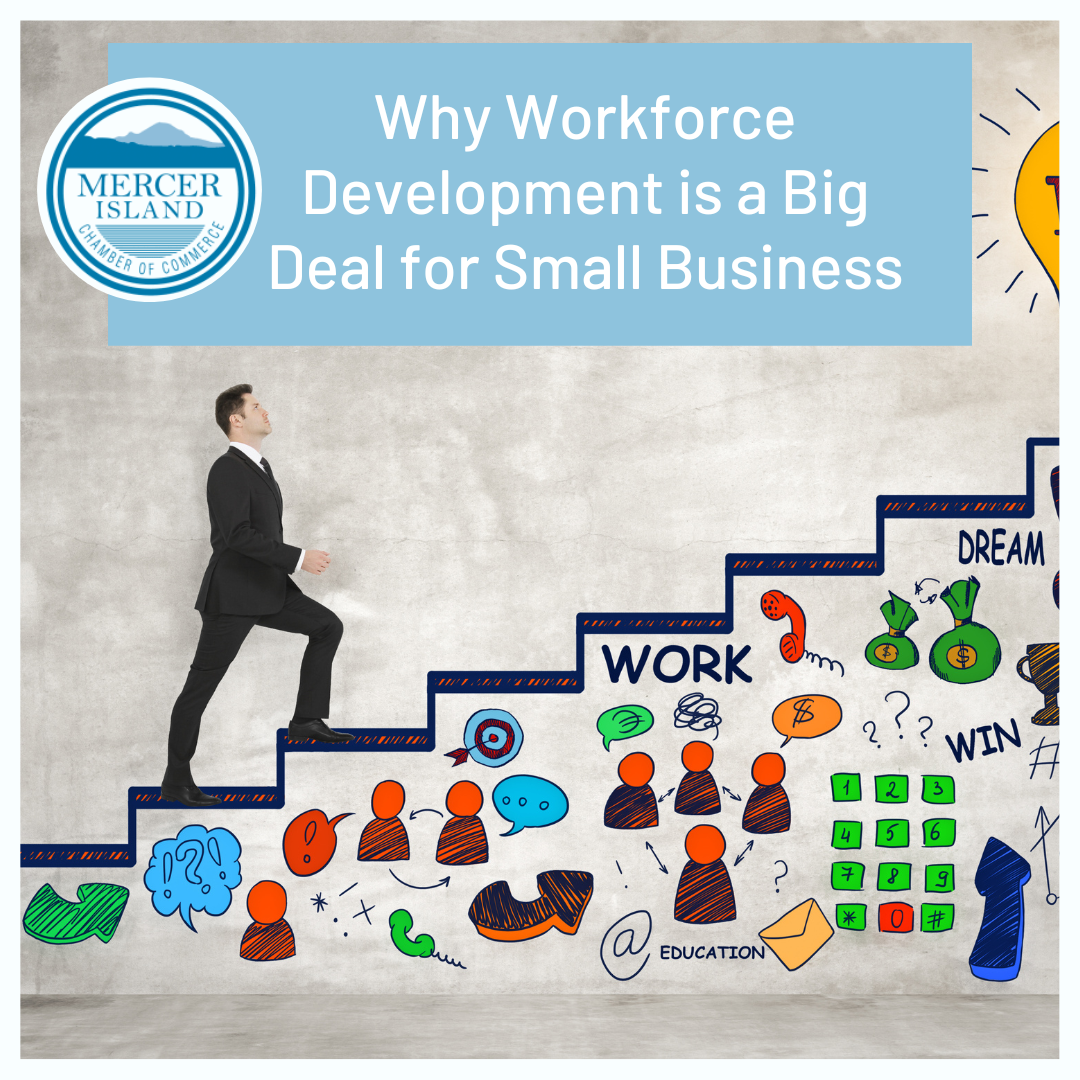
Why Workforce Development Is a Big Deal for Small Business

May 22, 2023

Many small and medium-sized business owners think that workforce development isn’t in their “lane.” They leave it to the big guys to work with the chamber and community leaders to ensure the large businesses have the skilled employees they need for the future. But unless you are a business of one and plan on remaining that way, workforce development should be a concern of all sizes of businesses. Here’s why you should want to get involved:


Why Small Companies Should Get Involved in Workforce Development


While workforce development may seem like a daunting task for small companies, there are several compelling reasons why they should actively engage in these initiatives:


●      Access to a Skilled Workforce: By participating in workforce development activities with the chamber and beyond, small businesses can play a pivotal role in shaping the skills and competencies of the future workforce. This provides them with a pool of well-prepared candidates who can contribute to their growth and success. A single small business isn’t the main employer of the area but collectively, there’s a good chance they are. Workforce development initiatives should consider and incorporate the needs of all employers when possible. The chamber can’t do that if you don’t get involved.

●      Enhanced Competitiveness: A highly skilled workforce gives small companies a competitive edge in the marketplace. By investing in employee development, businesses can improve productivity, innovate more effectively, and adapt to industry changes with greater agility. While your company may not have the budget to fund employee development, a workforce development initiative might. Working with leaders in workforce development can help you contribute your voice to the initiative while also benefiting from their programs.

●      Talent Retention and Attraction: Workforce development initiatives signal to existing and potential employees that the company and area value employee growth and development. This fosters a positive work environment, boosts employee morale, and increases retention rates. Moreover, small businesses that actively participate in these initiatives become more attractive to job seekers who prioritize professional growth and development. And may help get the small company’s name out there in the job market.

●      Building Stronger Networks: Engaging in workforce development activities provides small companies with opportunities to build relationships with educational institutions, industry peers, and other stakeholders. These connections can lead to collaborations, partnerships, and access to valuable resources and knowledge.


While small businesses may have limited resources compared to larger corporations, they have a unique opportunity to make a significant impact on workforce development. By engaging with the chamber of commerce, local educational institutions, industry associations, and larger companies in the area, a small business owner can provide valuable insights into what’s needed in the years ahead. Workforce development is not only crucial for individual companies but also for the overall economic growth and sustainability of the community.


Many small business owners think that as an employer of only a handful of people, their insights aren’t critical to the community’s plans. However, small business often comprises the largest employment segment in the area. Hearing from businesses under 200 employees is just as important as hearing from the largest employer. If small business owners don’t step forward to share their needs, the only ones who will be heard are big businesses and unless you think their employment needs and yours are the same, it’s time to speak up. 
By Jennifer Dean March 27, 2023
AI for Business: Bewares and Boasts Practical ways to use it in business and what to avoid
By Jennifer Dean March 6, 2023
If you’re a small- to medium-sized business that is trying to carve out a place for itself in a competitive market, you want to differentiate yourself from the competition. One way to do that is to offer something no one else is doing. You can create a new product or service or go after an untapped market. But if you’ve already tried all of those and you’re looking for something else, it’s time to find the peanut butter to your chocolate or the peas to your carrots. Partnering with another business can help you both offer something to your markets that neither has seen. Here are three ways to find your perfect complementary business so you both can profit. Finding the Ideal Business Collaboration If you’re old enough, you may remember the Reese’s Peanut Butter Cup commercials that showed two people enjoying very different snacks—one a chocolate bar and one a jar of peanut butter. Inevitably the two collided, one had chocolate in their peanut butter, and one claimed to have peanut butter on their chocolate. But either way, a scrumptious dessert was born. The same can be true of your business. You don’t need a formalized partnership with stakes in one another’s business. Instead, you can create special collaborations, offers, or referrals that are mutually beneficial to the businesses and your audiences. Brainstorm Businesses That Fit Yours Like Peanut Butter and Chocolate Make a list of businesses that provide a complementary service or product that you don’t offer but would benefit your target market. Ideally, the collaboration between you and this business should create something that other businesses aren’t doing. For instance, a bar that doesn’t serve food may pair up with a food truck to provide bar patrons with easy access to food while food truck aficionados can enjoy an alcoholic drink. Since some food trucks have sizable followings giving them access to your parking lot or a place to park can bring in new customers for you as well. Think About What Your Customers Want Building on that, make a list of what you hear customers asking for that you don’t currently do/offer. Take that list and decide whether those ideas make sense for your business. You can then decide to offer a new product or service line based on those customer requests, or you can collaborate with someone who has already created a successful business doing those things. For instance, if you own a gym, you could create a juice bar on-site or offer a healthy menu planning service. You could also work with someone to fill those needs. Here too there are options. You can rent some of your space to that business or create an affiliate or referral program so your gym members receive discounts for those other products or services at the other business’ location. Decide What Is Stopping Customers From Buying Is there something that is prohibiting potential customers from buying from you? What is the wall to purchase? Identify what is holding people back and solve it through collaboration. For instance, if you sell something large like furniture but you don’t offer delivery, partnering with a delivery or moving company may increase your sales. Some people don’t have the means (strength or room) to bring a large item home. But you may not want the headache of employing movers and covering the insurance. A partnership of this kind can benefit everyone. Business collaborations can help your business, the collaborator’s business, and (both of) your markets. By understanding what your customers need and want, as well as what holds them back from buying, you can create a satisfactory collaboration that benefits everyone and serves to separate you from your competition. This way, you’ll gain exposure to a new market or additional customers as well as improve business relationships. If you’re not sure how to make connections with other businesses, contact your chamber. They can put you in touch with someone looking to grow in a similar way.
By Jen June 13, 2021
Webinar | Thursday, June 17 | 10 - 11AM Presented by OneEastside SPARK, Center for Business Resilience and Innovation With Governor Inslee’s announcement that the state is moving toward a statewide reopening on June 30, 2021, many organizations are reviewing plans to return to their physical offices. Join us to learn more about how to properly navigate the COVID-19 employment issues and identify best practices and practical solutions for your organization. Discussion topics include: Safety protocols in the workplace Strategies for communicating the transition with your workforce and your legal obligations for accommodations Preparing vaccination policies for an in-person workplace Reasonable accommodation obligations
By Jen June 13, 2021
WEBINAR | Thursday, June 24 | 1 -3 PM Presented by OneRedmond SPARK, Center for Business Resilience and Innovation Recent information and guidance regarding Washington State’s reopening have created a confusing and at times contradictory compliance landscape for employers. Join speakers from Washington State’s Department of Labor & Industries, Division of Occupational Safety and Health (DOSH) and King County Public Health as they review current reopening guidance including: Employer obligations under the new Washington State safe workers proclamation Washington’s new screening guidance Whether to implement an employee/customer mask policy How to handle the intersection of vaccinated and unvaccinated employees Speakers include: Kristina Hudson, OneRedmond CEO, John Stebbins, WA State L&I Division of Occupational Safety & Health, Diane Agasid Bondoc, King County Public Health
By Jen May 19, 2021
Mercer Island Chamber Presents Our Annual Legislator Listening Sessions - virtual this year - will be an opportunity for our businesses to hear from our legislators and understand the lengths they went this past session to help protect our small businesses still struggling through the pandemic as well as our working families with children.
By Jen May 19, 2021
Sponsored by the East King Chambers Coalition, which includes Bellevue, Bothell/Kenmore, Greater Issaquah, Kirkland, Maple Valley/Black Diamond, Mercer Island, OneRedmond, Renton, Sammamish, SnoValley and Woodinville chambers Join the delegates of the East King Chambers Coalition, your fellow local business leaders and our Eastside legislators in a robust discussion about this year’s historic legislative session. Our moderator, Kirkland Mayor Penny Sweet, will facilitate panel discussions with the legislators that focus on four broad policy topics: transportation, budget and taxes, housing and human services and economic recovery and will take questions from the audience. Tune into this event, hosted by the Kirkland Chamber, to learn how our adopted legislative agenda fared this session and what we can expect moving forward.
By Jen May 4, 2021
We are ready to welcome back our beloved Mercer Island Farmers Market. The first market of 2021 will be on Sunday, June 6th from 10am - 3pm. You can expect COVID-19 safety protocols, but you can also expect some of the fabulous food, flower, and gift vendors that you've come to enjoy purchasing from. Please plan on supporting this special Mercer Island resource through the season. By supporting the MI Farmers Market, you also support our regional farmers and growers. To learn more about the Farmers Market, click below.
By 425 Business Staff May 2, 2021
425 Business magazine highlights the successful Regional Business Summit, which was held virtually on April 29th. This summit was the Chamber of Commerce of Issaquah, Newcatle, Sammamich, Snoqualmie, and Mercer Island. Issaquah's CEO, Kathy McCory hosted the event. Topics included COVID-19, economic resilience, technology, and diversity to name a few. For a thorough recap of the event, please read the article here.
By Jen April 28, 2021
OneEastide - Eastside Recovery Hub
By David Honigmann, Ana Mendy, and Joe Spratt February 2, 2021
When the COVID-19 crisis first erupted, organizations across the world were plunged into such uncertainty it was hard for many to know whether they would emerge intact. Now, though the road ahead remains difficult, leaders are shifting from whether they can return to how to do so .  Leaders are also having to manage waves of unfore­seen crises, including the recent protests in the United States and elsewhere. These events can take as much of a toll on workers’ productivity and mental health as radical, rapid changes in the workplace. Employees will have to confront cycles of disruption and adaptation, driven both by pandemic-related health reasons and new business imperatives, ranging from reorganizations to further reductions in workforces or furloughs. To read more of this article by McKinsey & Company, click here.
More Posts